Joshua Bailey
The average office worker spends more than nine hours a day sitting down. That statistic has become so familiar it’s almost lost its power to shock — and yet the health consequences of prolonged sedentary behaviour remain as serious as ever, linked to everything from cardiovascular disease and type 2 diabetes to anxiety, poor sleep, and reduced cognitive performance.
For organisations genuinely committed to employee health, the challenge isn’t awareness. It’s action. How do you create the conditions for your team to move more, eat better, and feel genuinely well — without adding pressure, creating obligation, or turning wellbeing into yet another thing people feel they’re failing at?
The answer, increasingly, is to make healthy behaviour feel like a choice people actively want to make. And few workplace activities do that more effectively than the smoothie bike.
Making Health Feel Like a Reward
The smoothie bike operates on a beautifully simple principle: the physical effort of pedalling generates the energy that powers the blender. Pedal harder, and the smoothie blends faster. Stop pedalling, and so does the machine. The cause and effect is immediate, tangible, and deeply satisfying.
But more than the mechanics, it’s the psychology that makes this activity so effective. Rather than presenting exercise as a duty — something done in service of some distant health goal — the smoothie bike presents it as a means to an immediate, enjoyable end. Nobody sits down on the bike thinking “I should exercise more.” They sit down thinking “I want that smoothie.”
That shift in framing is not trivial. Behavioural economists have long understood that the timing of a reward has an enormous impact on whether a behaviour gets repeated. Delay the reward by weeks or months, as most health advice does, and motivation collapses. Make the reward immediate — as the smoothie bike does — and you tap into a much more powerful motivational circuit.
Nutrition Education Through Experience
Corporate nutrition initiatives tend to fall into predictable patterns: a talk from a nutritionist, a booklet of healthy eating tips, perhaps a healthier range of options in the canteen. All of these have value. None of them are particularly sticky.
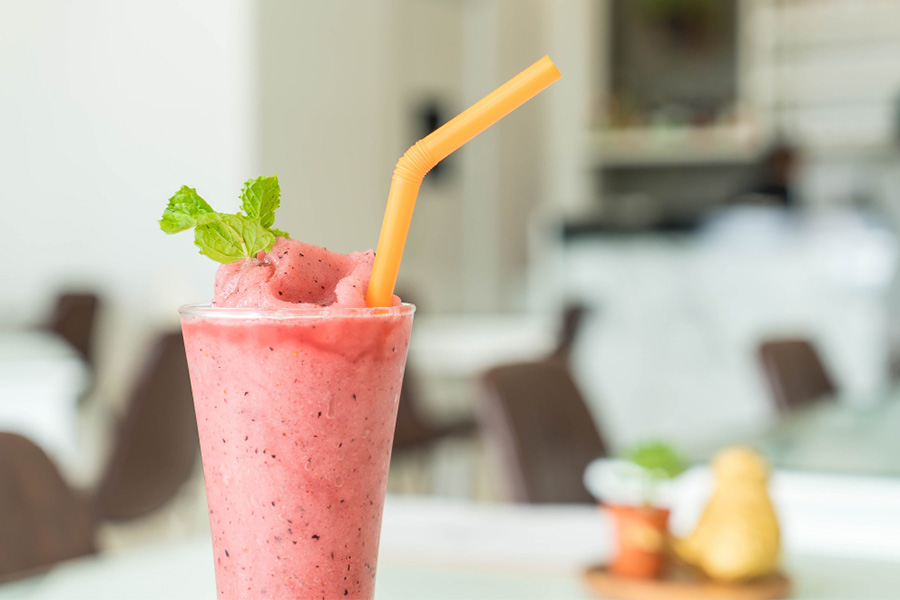
The smoothie bike offers something different — an experiential introduction to healthy eating that participants actually remember. When you’ve pedalled to blend your own mango, spinach, and banana smoothie, you’re not just learning that fruit and vegetables are good for you. You’re experiencing the preparation, tasting the result, and — crucially — making an active choice to do so.
That sense of agency matters. Research in health behaviour consistently shows that people are more likely to sustain habits that they feel they’ve chosen rather than been told to adopt. A smoothie bike doesn’t lecture anyone about their diet. It just makes healthy eating feel like fun.
The Engagement Multiplier Effect
One of the most consistent findings from organisations that have run smoothie bike events is that the activity pulls in people who would never normally participate in a wellbeing initiative.
This is partly because the format is inherently public and social. Unlike a therapy referral, a mindfulness app, or a gym subsidy — all valuable tools, but private ones — a smoothie bike sits in the middle of a room and invites everyone to join in. The social proof of seeing colleagues participate lowers the threshold for others to try. The playful competition of seeing who can pedal fastest makes people willing to look slightly silly in front of each other, which is itself a form of social bonding.
For HR teams frustrated by wellbeing initiatives that seem to reach only the already-engaged, the smoothie bike’s broad appeal is one of its most valuable features.
Perfect for Events, Not Just the Office
While smoothie bikes work brilliantly as a standalone office activity, they’re also one of the most versatile tools available to event organisers looking for something that stands out.
At exhibitions and trade shows, a smoothie bike station generates footfall and dwell time in a way that branded merchandise or free pens never will. Visitors stop to watch, ask questions, and — once they’ve tried it — remember the experience long after the event ends. The combination of physical engagement, sensory pleasure, and visual interest creates the kind of impression that lingers.
At corporate away days and conferences, the smoothie bike provides a natural focal point for breaks — transforming what might otherwise be a slightly awkward 20-minute gap between sessions into something energising and social.
For companies that hire smoothie bikes through a provider like Joyful Living, the bikes can also be branded — making them a powerful extension of your visual identity at any client-facing occasion.
A Note on Scalability
One practical concern that sometimes arises around smoothie bike events is capacity. With two bikes running at typical speed, an experienced operator can serve around 50 participants per hour comfortably. For smaller teams, a half-day session is usually sufficient. For larger organisations — those with hundreds or even thousands of employees — providers can accommodate multi-bike setups or multi-day bookings.
It’s worth having an honest conversation with your provider about group size upfront, to make sure the logistics are planned appropriately and nobody ends up with a frustratingly long queue. A well-planned smoothie bike session should feel abundant and relaxed, not rushed.
The Bigger Picture
A smoothie bike event isn’t a wellbeing strategy. It’s a moment — a vivid, enjoyable, health-promoting moment that sits within a broader commitment to employee wellbeing.
But moments matter. They create memories, shift perceptions, and — at their best — open doors. An employee who had a great time at a smoothie bike event might be slightly more receptive to the next wellbeing initiative you offer. A colleague who had never considered their nutrition might find themselves thinking differently about breakfast the following week. A team that laughed together over a pedal-powered blender has a slightly stronger bond than it did before.
These are not small things. In a workplace where wellbeing, engagement, and retention are increasingly central to organisational success, every positive moment counts.
Looking to make your next wellbeing event genuinely memorable? Explore what a smoothie bike session could look like for your team.


 Thomas